Saturday, July 4, 2009

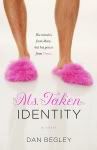
Ms. Taken Identity

I must admit, I'm very picky when it comes to chick lit; for every excellent story, there seems to be 100 "Babysitting for the Very Vuitton." What attracted me to Ms. Taken Identity wasn't the cute cover or even the plot, it was that it was written by a guy. And that, admittedly, is 100% why I chose to read it.

Ms. Taken Identity is about Mitch, a college professor and PhD student working on his epic novel. After being rejected by every publishing company, he has a moment of inspiration and a chance meeting. Seeing the popularity of chick lit books, specifically those done by the fictional author Katharine Longwell, he decides that it can't be that hard - that he, himself, should try to write his own novel. This is made even better when Katharine herself agrees to review the book after randomly meeting Mitch at a cafe. The only problem? Mitch told Katharine that his female cousin wrote the book - not him. And so starts a series of lies that spiral around until, of course, the end.

To get into the female mindset, Mitch reads magazines, watches Oprah, and joins a dance class under the pseudonym Jason. There, Mitch meets, and naturally falls in love with, Marie - a hairdresser who is more than the stereotypical girl Mitch is writing about. She's also his roommate's sister. And thus sets up the tale of Mitch - a slightly pretentious 27 year old who learns that sometimes you have to look past everything, every hang up, to see who you really are. And what you really want.

I must admit - I really liked Ms. Taken Identity. At 272 pages, it's an incredibly easy and short read (I got through it in two days). Full of pop culture references, the book absorbs you and messes with each emotion. Dan Begley does a fantastic job of telling a guy's story that will appeal to girls. The book, somewhat autobiographical (to the point that he, too couldn't sell is book so he decided to write a chick lit novel) sheds some light on why guys do what they do and think what they think. And, like every other girl, each decision still frustrated me. There were parts that I wanted to smack Mitch for being so stupid, but his decisions were so real - because it's what a guy would do in each situation. And that one element made it incredibly interesting.

What I liked most about the book was what it said about chick lit. There's one passage that specifically got to me:

In regards to the genre, Katharine states: "Even those stories that merely entertain us have the power to touch us and delight us, and that goes a long way toward making us more human."

Even I felt punched in the stomach there. Because it's true - like Mitch I was jaded by the genre for a while; it was too girly, to fanciful for me. But it still tells stories - ones that people truly love to hear. So what if every character ends up with the perfect person in the end, that's fun to read! And just as the realization hit me, it hit Mitch as well.

It was fun watching Mitch work through his novel, his lies and, even more so, his relationship with Marie. The characters were illustrated wonderfully - from the eccentric Rosie (who, admittedly, was my favorite) to the vulnerable father, each character was real.

Ms. Taken Identity is a great book for anyone who wants a quick, entertaining (albiet frustrating at times), and truthful read. It's a wonderful beach read and a perfect book to share with a friend. It's one that sticks with you for a while.

If interested, here's a passage from the book.

Saturday, June 20, 2009

L.A. Candy


LA Candy by Lauren Conrad.

I found this to be quintessential read of the summer for anyone who aspires. Yep, just anyone who aspires. Maybe you are a frumpy English lass with a voice of gold (kinda like the movie "Little Voices" only actual people) or a snotty brat from Colorado who is tortured by NBC (and who isn't these days?) if you have ever dreamed a dream, or not, this book is for you.

Ok, I'm joking! I haven't read this book (yet). I just spent $200 on books and realize I never write about what I read, BUT I do read your reviews...

Thanks for keeping my book list growing!

Saturday, June 13, 2009

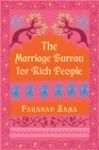
The Marriage Bureau for Rich People

The Marriage Bureau for Rich People
By Farahad Zama

What does an Indian man with a wealth of common sense do when his retirement becomes too monotonous for him to stand it? Open a marriage bureau, of course!

Thus starts The Marriage Bureau for Rich People, a fantastic book that tells the story of Mr. Ali and his small, yet extremely popular, marriage bureau. What starts out as a part time endeavor, flourishes quickly. The book showcases a brilliant cast of characters including Mr. Ali, the careful and kind business manager; Mrs. Ali, his strong and maternal wife; Aruna the full-time assistant to the bureau who's working through her own family-and non-existent marriage-problems; and a slew of people looking for the perfect match.

The customers, albeit important, are just the background to the true story. The young Aruna cannot get married due to her family's financial problems. She works to support them and without her salary, they cannot get by. And without money, they can't pay for the elaborate wedding or necessary dowry the husband's family will expect. While that is happening, Mr. and Mrs. Ali deal with their son, Rehman, a freedom fighter who's trying to stop a giant conglomerate from building on farmers' lands. As he fights for the rights of others, he forgets the feelings of his parents. And in India, you never disrespect your elders.

An underlining theme of the book is what makes a marriage work. To this day, the caste system is still going strong in India. One doesn't marry outside of their caste, and one very rarely marries for love. Instead, through family members, an appropriate match is made. But what's better? A marriage that appeases the family, or one that appeases the husband and wife?

What I found most endearing about the book was the role of Mrs. Ali. It's common to think that the man runs the household, that he leads. But, it's the wife's job to decide if she wants to follow or not. And although Mrs. Ali doesn't go against her husband, she's extremely well spoken and does what she sees as best, even if her husband doesn't understand at first. Mrs. Ali ultimately brings two important people together - not through a marriage bureau, but through love.

Farahad Zama tells the story beautifully with rich words and vivid elements. You could almost taste the halwa Mrs. Ali cooks, see the green sari Aruna purchases, or feel the ripe mango plucked from the tree. Zama doesn't leave one description out. I can't be alone in thinking this - Zama recently won the Melissa Nathan award for comedy romance. He is the first male writer to receive it.

The Marriage Bureau for Rich People is a delightful tale that's an extremely fun read. It made me laugh out loud at parts, and tear up with happiness at others. I loved how it concentrated on important elements of India, but presented them in a lighthearted manner. It's an excellent novel for anyone looking for a quick, enjoyable and interesting literary trip to India. I can't wait to read it again. I'll definitely be checking out the other books Zama has in store.

Friday, June 12, 2009

Slam by Nick Hornby

I read the blurb of the $13.59 copy of Nick Hornby's 'Slam', and my eyes didn't go wide with fascination, nor did my feet eagerly scuffle to the cash register. It was nothing new - teen pregnancy in the father's point of view, unsure of where his responsibilities lie and what is important. However, he is a bestselling author and I thoroughly enjoyed another three books of his, and so as a loyal fan, I ended up walking home with a plastic bag from Borders.

The little snippets of reviews from newspapers were quite promising, as was one of my friend's response to the novel. I began to read it, and instantly, I felt as if I'd known Sam for years. Yes, Sam is the main character; a sixteen-year-old skateboarder (or as he says, the more artistic term - skater) and the son of divorced parents, living with his mother. His family has been known to constantly screw up, and he's their biggest hope, but blood takes over all in the end - he gets his girlfriend, Alicia pregnant.

As I read on, having a nice chortle in between almost every paragraph, I could imagine Sam's every move and every facial expression. It did not occur to me as if it was a novel written by a fully-grown Englishman, but a friend sitting right next to me, telling me his life story over an ice cream. Despite a rather cliché plot, there were moments in the book where you thought, "Hah, he's definitely gonna do _____ next," and the character would do nothing like that at all.

In the end, I figured out that the story was not about the ordeals of dealing with teenage pregnancy, but that Hornby only used that as a vessel to convey a much bigger picture. Through Sam's dealings with the situation, Hornby slowly and handily, was able to encompass the process of growing up in only 342 pages, with the vocabulary of a teenage boy.

It started off as a not-too-promising novel, but with the charm and genuineness of the characters, the splashes of humor, and an experience everyone can identify with - it turned out to be quite worth my while. I think Nick Hornby's going to remain a favorite author of mine for the time being.

Wednesday, June 3, 2009

Angels and Demons by Dan Brown

Religious Symbolist Robert Langdon is back in this DaVinci Code prequel when he is called in by CERN (world's largest physics laboratory) after one of their top scientists, Dr. Vetra, was murdered. Upon his arrival at CERN, Langdon discovers that the killer left behind a clue that shows that the ancient brotherhood of the Illuminati may have resurfaced after being in hiding. At the same time, Vetra's daughter discovers that a container of anti-matter (an experiment she and her father was working on) had been stolen during the murder. Both of these elements lead Langdon to be swept up in to going to the Vatican to help destroy a plot to blow up the entire city.

It just so happens that the a beloved Pope had just died in preceding days and the Cardinals were beginning to start conclave to elect a new Pope. Just as the Cardinals head to conclave, four Cardinals go mysteriously missing and the Illuminant's vow to execute a Cardinal on each hour at the four altars of science. With the threat of the antimatter hidden somewhere in Vatican City/Rome and thousands of people gathered in Vatican Square, Langdon and his team must race against the clock to find the antimatter and discover the hidden clues that lead them to the ancient Illuminati altars of science.

This was a fantastic read and I really wish I had it read it much earlier before now. I finished the book before I headed off to the theater to see the film and I thought that the film was pretty decent. They left out quite a bit of detail surrounding the history of the Illuminati, CERN, and Vatican City in general but there so only so much you can do in a movie. I'd read the book just specifically for those elements. They also changed a bit about some of the ending details but the basic elements were there and I can see why they did what they did. Overall though, I found the book much more exciting. But, isn't that always the case?

Tuesday, June 2, 2009

Important Artifacts...

Important Artifacts and Personal Property From The Collection of Lenore Doolan and Harold Morris, Including Books, Street Fashion and Jewelry - Leanne Shapton

Important Artifacts... is quite possibly one of the most creatively done books I've ever read. Shown though an auction catalog, the book tells a story of two lovers (Doolan and Morris) through notes, gifts, books, clothes, and more all being auctioned off due to the fact that the relationship has ended. That's right - the story is told through pictures and explanations of each auctioned item.

Starting with the first time they met, each lot contains a memento from their four year relationship (2002-2006). From the invitation to a Halloween party where they mutually attended (dressed as Harry Houdini and Lizzie Borden) to dried flowers kept by both parties, the story of their love emerges. The items progress as the relationship does - from love notes hidden between pages of old paperbacks to angry e-mails sent from across the sea. The book shows what's left behind after a relationship ends.

Leanne Shapton, the art director for the New York Times Op-ed page, excellently puts together this story. In a fantastic interview with the New York Times, she states: “It’s sort of about how reliant we are on our things to define us,” Ms. Shapton said, acknowledging that there is a strain of what she described as somewhat “suffocating discernment” running through the protagonists’ lives. “But I wanted to balance that with a pretty genuine love of very private meaning,” she said, adding that most of the things put up for sale are “those kinds of things that mean everything to the person who owned them and nothing to anyone else.”

The book ends with the breakup, of course, but starts with hope. As a preface to the catalog, a recent postcard from Hal states that he and his current girlfriend broke up. That he'd like to see Lenore once again. It leaves the book open for another shot at love, or, another auction.

Important Artifacts... is a brilliantly done quick read that shows the transgression of a relationship. And how little artifacts can really tell a lot about a person or a time period.

Watch a clip with Shapton here and read an interview here.

The book's movie adaptation is currently in progress, staring Brad Pitt and Natalie Portman.