Showing posts with label Lauren's reviews. Show all posts

Saturday, July 4, 2009

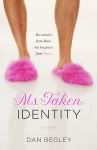
Ms. Taken Identity

I must admit, I'm very picky when it comes to chick lit; for every excellent story, there seems to be 100 "Babysitting for the Very Vuitton." What attracted me to Ms. Taken Identity wasn't the cute cover or even the plot, it was that it was written by a guy. And that, admittedly, is 100% why I chose to read it.

Ms. Taken Identity is about Mitch, a college professor and PhD student working on his epic novel. After being rejected by every publishing company, he has a moment of inspiration and a chance meeting. Seeing the popularity of chick lit books, specifically those done by the fictional author Katharine Longwell, he decides that it can't be that hard - that he, himself, should try to write his own novel. This is made even better when Katharine herself agrees to review the book after randomly meeting Mitch at a cafe. The only problem? Mitch told Katharine that his female cousin wrote the book - not him. And so starts a series of lies that spiral around until, of course, the end.

To get into the female mindset, Mitch reads magazines, watches Oprah, and joins a dance class under the pseudonym Jason. There, Mitch meets, and naturally falls in love with, Marie - a hairdresser who is more than the stereotypical girl Mitch is writing about. She's also his roommate's sister. And thus sets up the tale of Mitch - a slightly pretentious 27 year old who learns that sometimes you have to look past everything, every hang up, to see who you really are. And what you really want.

I must admit - I really liked Ms. Taken Identity. At 272 pages, it's an incredibly easy and short read (I got through it in two days). Full of pop culture references, the book absorbs you and messes with each emotion. Dan Begley does a fantastic job of telling a guy's story that will appeal to girls. The book, somewhat autobiographical (to the point that he, too couldn't sell is book so he decided to write a chick lit novel) sheds some light on why guys do what they do and think what they think. And, like every other girl, each decision still frustrated me. There were parts that I wanted to smack Mitch for being so stupid, but his decisions were so real - because it's what a guy would do in each situation. And that one element made it incredibly interesting.

What I liked most about the book was what it said about chick lit. There's one passage that specifically got to me:

In regards to the genre, Katharine states: "Even those stories that merely entertain us have the power to touch us and delight us, and that goes a long way toward making us more human."

Even I felt punched in the stomach there. Because it's true - like Mitch I was jaded by the genre for a while; it was too girly, to fanciful for me. But it still tells stories - ones that people truly love to hear. So what if every character ends up with the perfect person in the end, that's fun to read! And just as the realization hit me, it hit Mitch as well.

It was fun watching Mitch work through his novel, his lies and, even more so, his relationship with Marie. The characters were illustrated wonderfully - from the eccentric Rosie (who, admittedly, was my favorite) to the vulnerable father, each character was real.

Ms. Taken Identity is a great book for anyone who wants a quick, entertaining (albiet frustrating at times), and truthful read. It's a wonderful beach read and a perfect book to share with a friend. It's one that sticks with you for a while.

If interested, here's a passage from the book.
Saturday, June 13, 2009

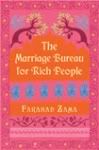
The Marriage Bureau for Rich People

The Marriage Bureau for Rich People
By Farahad Zama

What does an Indian man with a wealth of common sense do when his retirement becomes too monotonous for him to stand it? Open a marriage bureau, of course!

Thus starts The Marriage Bureau for Rich People, a fantastic book that tells the story of Mr. Ali and his small, yet extremely popular, marriage bureau. What starts out as a part time endeavor, flourishes quickly. The book showcases a brilliant cast of characters including Mr. Ali, the careful and kind business manager; Mrs. Ali, his strong and maternal wife; Aruna the full-time assistant to the bureau who's working through her own family-and non-existent marriage-problems; and a slew of people looking for the perfect match.

The customers, albeit important, are just the background to the true story. The young Aruna cannot get married due to her family's financial problems. She works to support them and without her salary, they cannot get by. And without money, they can't pay for the elaborate wedding or necessary dowry the husband's family will expect. While that is happening, Mr. and Mrs. Ali deal with their son, Rehman, a freedom fighter who's trying to stop a giant conglomerate from building on farmers' lands. As he fights for the rights of others, he forgets the feelings of his parents. And in India, you never disrespect your elders.

An underlining theme of the book is what makes a marriage work. To this day, the caste system is still going strong in India. One doesn't marry outside of their caste, and one very rarely marries for love. Instead, through family members, an appropriate match is made. But what's better? A marriage that appeases the family, or one that appeases the husband and wife?

What I found most endearing about the book was the role of Mrs. Ali. It's common to think that the man runs the household, that he leads. But, it's the wife's job to decide if she wants to follow or not. And although Mrs. Ali doesn't go against her husband, she's extremely well spoken and does what she sees as best, even if her husband doesn't understand at first. Mrs. Ali ultimately brings two important people together - not through a marriage bureau, but through love.

Farahad Zama tells the story beautifully with rich words and vivid elements. You could almost taste the halwa Mrs. Ali cooks, see the green sari Aruna purchases, or feel the ripe mango plucked from the tree. Zama doesn't leave one description out. I can't be alone in thinking this - Zama recently won the Melissa Nathan award for comedy romance. He is the first male writer to receive it.

The Marriage Bureau for Rich People is a delightful tale that's an extremely fun read. It made me laugh out loud at parts, and tear up with happiness at others. I loved how it concentrated on important elements of India, but presented them in a lighthearted manner. It's an excellent novel for anyone looking for a quick, enjoyable and interesting literary trip to India. I can't wait to read it again. I'll definitely be checking out the other books Zama has in store.

Tuesday, June 2, 2009

Important Artifacts...

Important Artifacts and Personal Property From The Collection of Lenore Doolan and Harold Morris, Including Books, Street Fashion and Jewelry - Leanne Shapton

Important Artifacts... is quite possibly one of the most creatively done books I've ever read. Shown though an auction catalog, the book tells a story of two lovers (Doolan and Morris) through notes, gifts, books, clothes, and more all being auctioned off due to the fact that the relationship has ended. That's right - the story is told through pictures and explanations of each auctioned item.

Starting with the first time they met, each lot contains a memento from their four year relationship (2002-2006). From the invitation to a Halloween party where they mutually attended (dressed as Harry Houdini and Lizzie Borden) to dried flowers kept by both parties, the story of their love emerges. The items progress as the relationship does - from love notes hidden between pages of old paperbacks to angry e-mails sent from across the sea. The book shows what's left behind after a relationship ends.

Leanne Shapton, the art director for the New York Times Op-ed page, excellently puts together this story. In a fantastic interview with the New York Times, she states: “It’s sort of about how reliant we are on our things to define us,” Ms. Shapton said, acknowledging that there is a strain of what she described as somewhat “suffocating discernment” running through the protagonists’ lives. “But I wanted to balance that with a pretty genuine love of very private meaning,” she said, adding that most of the things put up for sale are “those kinds of things that mean everything to the person who owned them and nothing to anyone else.”

The book ends with the breakup, of course, but starts with hope. As a preface to the catalog, a recent postcard from Hal states that he and his current girlfriend broke up. That he'd like to see Lenore once again. It leaves the book open for another shot at love, or, another auction.

Important Artifacts... is a brilliantly done quick read that shows the transgression of a relationship. And how little artifacts can really tell a lot about a person or a time period.

Watch a clip with Shapton here and read an interview here.

The book's movie adaptation is currently in progress, staring Brad Pitt and Natalie Portman.

Friday, May 29, 2009

Atlas of Unknowns

Atlas of Unkowns by Tania James

Atlas of Unknowns was actually nothing like I thought it would be. And that's a good thing. Set in Kerala, India, this beautiful written and incredibly involved story introduces us to two sisters Linno and Anju, and their unknown past and future. When Linno was 7, and Anju just a baby, their mother Gracie died in the ocean. Being raised by their father Melvin, they faced another tragedy when Linno burns her hand badly with a firecracker. Trying to surpass their sad history, Anju, the brilliant one, applies for a scholarship that will take her to New York City, where she will study for 10 months. Lucky for her, she receives the scholarship, yet only by staging a lie - one that reveals itself a few months into her stay in the city.

The story continues to revolve around the girls and how they will one day be reunited again. As Anju tries to get a green card and works in a beauty salon, Linno earns money to get her Visa by creating handmade invitations. Juxtaposed by the story of their mother's past, everything comes together at the end when two separate tales are joined.

I really enjoyed Atlas of Unkowns. The book was incredibly engrossing - jumping from story to story, it was a nonstop page turner. As James's first novel, she weaves a beautiful, yet heartbreaking tale of two sisters and how much they'll risk to set things right. James' descriptions of rural India are so vivid that you could see the multi-colored saris and taste the spicy foods. What she portrays most interestingly, however, is Anju's time in the city. An outsider trying to fit in, Anju learns how to push her way into the subway, talk to people in department stores and make friends with classmates. I also loved the descriptions of Linno's innvitations. Seeing her create an object out of nothing was especially inspiring.

The story is deep, with many layers detailed different generations of the family. Each substory is important, each relates back to the present. Each section is told by a different main character, which is especially important. With that, you learn each side of a story, every part of a never forgotten tale. Additionally, every character is given an incredible amount of detail-enough that you feel as if you know them. Of those Bird is the most important, with her motherly protective ways towards Anju.

My main problem with the book is that it doesn't wrap up in the end. Yes, things are resolved, however so much more is left out. Characters are dropped and plot lines are avoided. Although none of them are as essential as the main story, I would have liked to see what happened afterward. I suppose this book isn't a story though - it's about a life. A life can't be wrapped up after 300 pages; it keeps going.

Regardless, Atlas of Unknowns truly is a beautiful book that I recommend to anyone who has an interest in Indian lifestyles, cultural studies or coming of age tales. I look forward to whatever else Tania James writes.

Tuesday, March 24, 2009

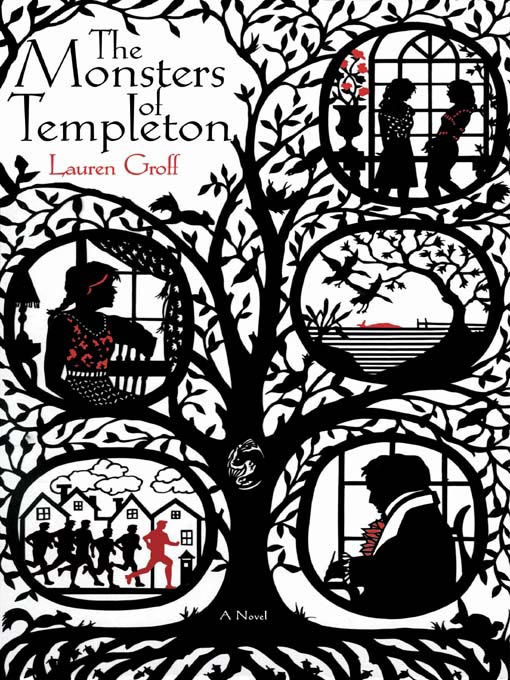
The Monsters of Templeton

The Monsters of Templeton by Lauren Groff

When this book came out in 2008, the cover instantly made me want to read it. And then, after seeing much talk about it, I finally picked it up. In the end, I'm incredibly glad I did. The Monsters of Templeton is about a girl who returns home from graduate school after a disastrous event to find her small, idealistic town turned slightly upside down. It turns out that in the lake she used to run by and play in, they discovered a monster. A real one. A giant one. The thing is, that's not at all the monster the title is referring to.

While home, at a place she never wanted to visit again, Willie tries to re-coop and reconnect with her hippie mother who's found religion. While doing this she learns of her mother's greatest secret: apparently Willie was not the product of a faceless father during her mother's reckless days in San Francisco, oh no, instead she's the product of one of her Templeton neighbors. One that may, just may, be related to her way back down the line.

And so starts The Monsters of Templeton an intricate tale that follows Willie as she does intense research to find how who her real father is. As the chapters fly by, you read accounts by each person from her family, from old letters to diary entries. Her family tree has so many branches that I created my own genealogy chart to follow it correctly. And it ends with one welcome understanding.

What I was most impressed with was Groff's voice. This being her first novel, she has a very sophisticated story telling ability. For each character she portrays within the novel, there's a new character voice. She creates so many personas and so many histories it's incredibly impressive and addictive. In the end, you just hope that everything she wrote was true and that Templeton (actually based off of the real city Cooperstown, NY) is exactly how you imagine it to be. I do agree that some subplots were a bit much and a bit overwhelming, but that didn't matter in the end. I devoured this book quickly, really loving it, which is why I'm trying to stop myself from tracking down the author who coincidentally lives right by my boyfriend. I'm definitely excited to read her new short story collection Delicate Edible Birds.

The Monsters of Templeton is about reconnecting with your past and learning from it. Going back and reevaluating the monsters and the heros. Learning enough from it to form a future that the next few generations can research and maybe even inspire to be like.

Monday, March 23, 2009

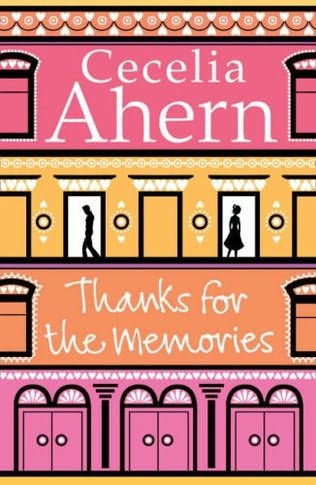
Thanks for the Memories

Thanks for the Memories by Cecelia Ahern

Oh Cecelia Ahern, we meet again. While in London, I picked up a paperback copy of Thanks for the Memories since it doesn't come out (in hardback!) until next month here in the states. The Irish writer has made quite a name for herself and I'm always excited to read her next novel. I suppose that's why I was slightly disappointed with this book.

Ahern is known for starting her books in the middle of a tragedy and this book is no different. It opens with the heroine, Joyce, laying at the bottom of a staircase after a terrible fall, one where she miscarries her baby. Elsewhere, Justin, after suffering from a painful divorce, meets an attractive woman who somehow manages to convince him to donate blood. From there, the story weaves these two characters together through chance meetings and magical realizations. Ahern is known for giving her stories a fairy tale sort of feel and this one is no different.

My problem with this book was that it was incredibly predictable, right down to the ending. The characters were illustrated well enough, you liked them and understood their actions, however that was it. My greatest compliment for this book is that it's well written in typical Ahern style. It is grabbing, definitely, but it left me feeling nothing, regardless of the happy ending.

If you're looking for something that's a quick read (despite its 400 pages) with surefire happiness, then this is the book for you. If you're looking for something a bit deeper, a bit more like her last few novels, than wait for her next book The Gift which seems to be getting better reviews. Despite my lack of love for this book, I'll definitely still check it out. I like her writing too much to give up.

Tuesday, February 3, 2009

The Wonder Spot

The Wonder Spot by Melissa Bank

I found this book for $1.50 at a used book store. Having previously read Bank's other book, I was tempted to buy it, especially at that price. It was, quite bluntly, not a good choice, even at $1.50. Sophie Applebaum is our heroine, an everyday Jewish girl. The book illustrates small parts of her life from age 12 through 30-something. Each piece has a different impact on her life and is important in one way or another. The thing is, you never know why they're important. I suppose I expected everything to come around, for things to be explained, but they never were. Sophie kept going with her job she hated and love life that never went her way, but she never changed. Instead, she complained. She never grew or became someone better. And because of that, I really didn't like her. The ending left me confused and wondering what, exactly, the point of the book was. To give Bank credit, though, her writing is good. Her descriptions are fantastic and the book is engaging. It's just not worth it in the end.

Monday, February 2, 2009

Extremely Loud and Incredibly Close

Extremely Loud and Incredibly Close by Jonathan Safran Foer

Released within the same year as The History of Love, there was a minor controversy started when this book came out. Both have young and naive starring characters, both have influential older Jewish characters who've been through traumatic events relating to the Holocaust, both have the characters searching for something, someone. And, most importantly, they're written by husband and wife. Foer, who is previously famous, crafted with this novel one of the most interesting looks at 911. The story follows Oskar, who's father died in the World Trade Center. As the novel starts up, Oskar discovers a key in his father's closet. Thinking it will bring closure to his father's death, he is determined to find the lock. And thus starts the epic story that has him all over NYC, meeting people and finding his way. At the same time, Oskar's grandmother is writing letters about her life growing up and how she had to flee after the bombing of Dresden. How she falls in love. How she falls out of love. Much like The History of Love, Extremely Loud... takes you on a journey through different lives, all of which come together in the end brilliantly. Told with pictures and various typographies, the book is an adventure and highly addictive. It has one of those endings where everything hasn't changed, however it gives you an interesting feeling of hope. I really liked it.

The History of Love

The History of Love by Nicole Krauss.

Once upon a time there was a boy who loved a girl. The History of Love is far from what you expect it to be - it is not a simple love story about two people falling in love, breaking up, getting back together and living happily ever after. It's far from that , actually. The History of Love is a beautifully written intricate tale of the fate of two very different strangers and how their lives connect. It takes you from Nazi invaded Poland, to current day New York City. Story number #1 centers around Leo Gursky, an old, old, old Jewish immigrant just trying to live until tomorrow. He reflects often about a girl he loved back in Poland and wants to be remembered. Story #2 shows young Alma who is trying to make her mother happy and fall in love. Her mother, a book translator, lost her husband, Alma's father, many years ago and her only companion is an old book called "The History of Love." Knowing that, Alma tries to find information about the book. The story is heartbreaking and beautiful. You're involved in it up to the very last word. In a book where many stories take place, all separate, it's amazing how they all connect together lovingly in the end. I'm really excited to read every other book Krauss wrote and will write.

Tuesday, December 23, 2008

Holidays on Ice

I love David Sedaris. I love his writing - it's witty and amazingly observant. His commentary on daily life is brilliant and I'm quite certain that if we met in real life, we'd be best friends. It was because of this that I was interested in finally, after all these years, reading his Christmas collection Holidays on Ice. Sadly, in the end, I'm very torn with the book. 

Some essays are hilarious, like "SantaLand Diaries" and "Dinah, the Christmas Whore." They share memories from his past Christmases worth mentioning (working as one of Santa's Elves at Macy's, having a prostitute join his family for Christmas). Some were published in other books of his, so I've already read them, such as "Let it Snow" and "Six to Eight Black Men" (which are both terrific, nonetheless). And then some (three to be exact) I really didn't care for. They were okay, sure, but not written in his usual style. Rather than being first person narratives, he assumed the role of someone else and wrote their story (a angered wife, a rich competitive man, a TV executive) I didn't care for those stories and found myself skimming the pages rather than indulging. When it got back to his voice, I was comfortable again. 

The book didn't exactly get me into the holidays spirit, but it did bring out the jaded side of me. And that's just as good, right?

Wednesday, December 3, 2008

Veil of Roses

Veil of Roses by Laura Fitzgerald is about Tamila, a 27 year old Persian girl, trying to make a life in America. Born in California, Tamila and her family moved back to Iran while she was an infant. Upon moving back, her family's passports were ripped up, never permitting them to travel again. Now, after quitting her job as a teacher, as a birthday gift, her parents present her with a limited three month visa. She's to return to America, live with her older sister, and find the freedom she deserves.. and ultimately needs.

From trying on her first Victoria's Secret bra to ordering coffee at Starbucks, you watch Tami grow. Sometimes failing, she never gives up and always continues her walk home, her awkwardly worded conversation, or quest to find a husband in order to stay in the states. The book's overall theme was hope - hope for a better future. Eye opening in many ways, you learn about the Persian lifestyle and, ultimately, about yourself. As Tami realizes that she could, in fact, sit with men and drink coffee out in public, you realize that in some countries, it's outlawed. As she realizes that she can make decisions on her own, you realize that somewhere people can't. Tami is endearing and fun loving. The book lets you cheer on her quest for a better tomorrow.

Wednesday, November 19, 2008

Q&A

Q&A by Vikas Swarup focuses on the life of 19 year old Ram Mohammad Thomas, a poor server in Mumbai, India, who somehow wins a billion rupees on India's equivalent of Who Wants to be a Millionaire. Convinced that he cheated (and unable to pay the winning prize amount), the producers try to jail the boy until an attorney interrupts. And that's just the first chapter.

The rest of the book tells the story of Ram's life. Each chapter starts with him discussing with the attorney a certain memory from his past. Each chapter ends with a video clip of him answering a question from the quiz show correctly. Each story he tells correlates perfectly with the question and you learn how he answers each question perfectly. You cheer Ram on as he narrates his tale. His life is full of crazy episodes (living with has-been celebrities, learning about India's red light district, giving tours of the Taj Mahal illegally), but the crazier the better. The ending is far from disappointing, as Swarup delivers an interesting and shocking twist. Every person Ram meets throughout his life is important, every scenario memorable. The book is beautiful, addictive and incredibly entertaining. The writing is spot on and the heartbreaking and warming tale is one to be remembered. Ram is a character who lives on with you, weeks after the last page is closed.

(The film adaptation, Slumdog Millionaire by director Danny Boyle is now out in selected theatres. It focuses more on the love aspect, but still it looks incredible.)

Thursday, September 4, 2008

Gossip Girl

Okay, I admit it. I love the TV show Gossip Girl. It started as a guilty pleasure, something I watched secretly every week, hidden in my bedroom, but soon it grew. Since I enjoy it so much, I decided to check out the book series it's based on, penned by Cecily Von Ziegesar (an Upper East Side name if I've ever heard one.) Now, I'm going to be honest here and say that the first book was absolutely terrible. So bad, in fact, that I refuse to continue the series. And here's why.

1) The characters are terribly written. Each character is a complete stereotype. There's the brooding poet, the hot rich girl, the sex-crazed guy friend, and so on. And not one is likable. It's hard to feel bad for them when you can't stand them. From start to finish, the characters never learn or grow, they just stay the same. Yes, this is high school, I get it, but it's also a book. Give me some depth! The book has none.

2) The plot is everywhere. I wasn't exactly sure where the book was going. Was there a climax? Was I excited about anything? No, not really. The author writes a typical day fine, but that's the problem with the book. It's all very...boring. And when something "big" happens, it's nothing of note.

3) What was the purpose of "Gossip Girl?" A various blogger called "Gossip Girl" intermittently adds various pieces of information about the cast of characters. None of it is important though. I suppose it's showing that we live in a digital age, but it doesn't help the story progress, nor does it matter.

I hate saying that a TV show is better than its literary counterpart, but that's the case here. I think Ziegesar should take a few notes from the creator of the show, Josh Schwartz, and liven up the books a bit. Bring some truth into them, make the characters relatable. Because the first book is like a thrift store t-shirt. Trendy to get, but not always perfect. Clean it up and accessorize a bit and then you'll have something special.

Sunday, August 10, 2008

Breaking Dawn

(If you plan on reading the Twilight Series, you may not want to read this review, as it discusses moments in the previous books.)

For starters, I admit that at the age of 24 I still enjoy young adult literature. There's something about the Twilight Series, by Stephenie Meyer, that's ridiculously addictive. The plot is enticing, the characters are so well drawn out that they become friends, and the overall books are satisfying. With that being said, the last book in the series, Breaking Dawn, is a bit underwhelming.

Eclipse, the third book in the series, leaves off with Bella's ultimate choice. After almost being murdered by a gang of young and angry vampires, she finally chooses that her love for Edward, her vampire boyfriend, is stronger than her friendship with (and possible love for) Jacob, her werewolf best friend. With that, she rejects Jacob and agrees to marry Edward. Breaking Dawn starts on a hopeful, gentile, and happy note: preparations for the wedding and honeymoon. There, Bella will, as planned, finally join her future husband in a life of bloodlust as a vampire.

Naturally, there are some complications. These early set complications, along with previously noted problems, all culminate to lead up to the climax 700 pages later.

In my opinion, the problems with the book start with the voice. Between Eclipse and Breaking Dawn, Meyer penned a book out of the series entitled, The Host. Although the characters in The Host sound exactly like those characters we've grown to love in the Twilight Series, some of her writing style changed and with that, left Breaking Dawn different. She lost some of her characters, giving them new personalities and new motivations. Jasper becomes friendly and winks at Bella. Rosalie becomes angrier than normal. Also, what's with the nicknames? Since when was Jasper "Jazz" and Emmet "Em"?

A third of the way through the book she changes voices completely. Rather than having Bella narrate the middle chapters, she has Jacob. The reason is unknown. After three books of learning, accepting, and loving Bella's narrative, this new voice is different and irritating. Important at times, definitely, but there could have been ways to explain what happened without changing the voice. And most importantly, it's not very masculine. Meyer tries too hard to make him sound like a teenage boy, which results in dialogue even movies wont use. Thankfully, the narration is changed back to Bella's at a very crucial part.

I think the biggest problem Meyer faced, however, were her fans. It's not unknown that these books have created quite a following. With millions of fans aching to read the last book, message boards were filled with predictions, hopes, and fears. Wanting to suffice every fan, Meyer created a plot that lacked the passion she originally had in the series. Wanting to appease the fans, she lost many.

The plot itself was endearing at times, yet ridiculously over the top at others. My wildest prediction was proved to be true, something I truly hoped would not happen. Sure, a story of a vampire, human, werewolf love triangle is a bit out of the ordinary, but that's acceptable compared to what she proposes in the book.

Complaints aside, the book was decent. Not nearly as satisfying or complete as the others, yet still good and still very enjoyable. It had moments where I couldn't put the book down, moments that I reenacted in my head while at work. Moments that made me smile because it reminded me WHY I loved the series so much. With liking the characters as much as I do, I wanted to keep reading. I wanted to love it. And because of that, I did enjoy it. I did like how it ended, a happy ending, as she promised, and I liked what happened with each character. It was a solid ending to the series.

Sunday, June 15, 2008

The Curious Case of Benjamin Button

In preparation for the upcoming film, I recently read F. Scott Fitzgerald's short story The Curious Case of Benjamin Button. As a long time Fitzgerald fan (I was an English major, it's in our blood to love him), I was utterly impressed by this work. The story is about Benjamin Button and his strange life. Born as an old man, he slowly ages backwards as the story progresses. Obviously, this causes many issues, especially concerning school (someone who looks fifty simply can't go to college with seventeen year olds!), women, and his family's status in society. Not only does he look old as a child, but he's educated as such, thus as he ages, not only does he become younger, but his brain and maturity change as well. The tale is dark, at times, naturally, but Fitzgerald tells it well.

Fitzgerald is known as a proper wordsmith, weaving a story with an imaculate amount of analogies and word play. His sentences flow easily, keeping the reader intrigued. His description of life in 1860 was written so well that it's almost relatable at times. We still suffer from similar situations, such as wanting to fit in.

As mentioned, the film comes out soon, directed by David Fincher. At first I was worried, wondering how they could expand on this story, however judging by the beautifully done trailer, I think they have it under control.

Read the book online here, or download the audio book here. Both are for free.

Wednesday, June 11, 2008

Radio On

Once upon a time, radio was a sound salvation. It played all the time, in the kitchen, in the bedroom, on the pool deck, in the car. The tinny pop chug-a-lug wired the air around it with bright-minded echoes of retro romance and fakey fun, filling up the empty blue space that envelops all suburbia with the simplest of all possible remedies for boredom: a beat. - Gina Arnold, Route 666

Sarah Vowell's first book, Radio On is a diary of sorts that documents her experiment: listening to the radio every day for a full year. To some, this may sound simple, but she doesn't simply listen, she engulfs it, understands it, and somehow becomes the radio. Listening to everything from the top ten hits to obscure Native American chants on AM stations, she documents every song and every commercial listened to. An interesting anthropological study of her, if nothing else.

The book was written in 1995, a year after Kurt Cobain passed away and that's what sets the the book on the first page. Being a long time fan of the band Nivana, Vowell discusses how the band didn't just play music, they influenced it, along with a generation of followers. Throughout the book she touches on other musicians she likes (Courtney Love, Smashing Pumpkins) and abhors (Alanis Morissette, Hootie and the Blowfish). She addresses the idea of selling out and how most bands are completely overplayed, leaving the radio full of repetition and nothing new.

As stated, she doesn't just listen to music. Being a great hater of Rush Limbaugh, she frequently tunes into his program to see what he's ranting about. It's an interesting social commentary, listening to her opinions of him, juxtaposed by her vision of Clinton and the time, a president who she didn't always agree with, but ultimately supported. Along the way, she tuned into NPR frequently, namechecking greats such as David Sedaris and Ira Glass (individuals who she later in her life became friends with and works with currently on the program This American LIfe).

What was most interesting to me wasn't just her analysis of the radio (which she, ultimately, gets sick of half way through, yet trudges through like any good writer would), but how the book is very dated. Taking place in 1995, she addresses radio and CDs as the only medium of music. In one scene, during an early recording of This American Life, she notes a new, unfamiliar piece of equipment, a minidisc. Ultimately, I'd love to know what Vowell thinks of the radio today. Although, mostly, it hasn't changed, we still have Rush, we still have repetative top ten hits, but it's not nearly as influential as it was back then. In days of sirius radio where you can listen to whatever you want whenever you want, ordinary channels seem out of date. And regarding politics, I wonder what she thinks of the situation nowadays, or what she thinks of Mrs. Clinton running (and losing) for the democratic candidate. 

As a long time Vowell fan, I will admit this was my least favorite of her few, however I did enjoy it. It was an interesting journey through the world of this medium, something that, admittedly, I rarely listen to. If nothing else, it inspired me. Inspired me to put down the itunes and ipod and turn on the radio for at least right now. Who knows what I'll find on it.

Thursday, June 5, 2008

New Moon


I've noticed recently that there are reviews for both Twilight and Eclipse by Stephenie Meyer on this website, however none for the second book, New Moon. With the fourth book in the series, Breaking Dawn, coming out in less than two months, I figured I'd add the missing review, hopefully convincing others to join me in enjoying this series.

(As a general warning, if you plan on reading the "Twilight" series, please don't read any further as this post may give away some key plot points. I wouldn't want to ruin it for anyone.)

Before starting New Moon, my roommate Megan simply told me to get through the book and that Eclipse (the third book in the series) is much better. I doubted her, wondering how a book that continues the wonderful tale could be disappointing? Boring even?

Megan, like always, was pretty much right.

New Moon continues where Twilight left off. Bella is starting her senior year of high school in Forks. She and Edward are deeply in love and everything seems more than perfect. That is, until a disastrous accident occurs during her birthday party. Edward sees it smart for him to leave her, to get her away from vampires and danger. Naturally, this doesn't sit well for her.

As she learns to piece herself back together, as hard as it is, she becomes rebellious, lost, and friendly with the boy Jacob Black. She learns that cheery Jacob might have some secrets of his own, ones that might effect everything around her.

As I was reading reviews for this book, the most common complaint was that Edward wasn't in it nearly enough. Pathetically, I have to completely agree. I found myself flipping pages to see if I could find his name later on, if I could see any of the Cullens mentioned. It wasn't that I didn't enjoy the story between Bella and Jacob, it's just that it wasn't right. Juliet should be with Romeo, not Paris. 

The story moved slow and I believe that was the main problem. It wasn't bad, it was still interesting and I was still deeply addicted, but it didn't grab me nearly as much as Twilight did. However, Bella's emotions were very relatable. Which brings me back to my highest compliment for Meyer. She writes characters exceptionally well. They're very real, to the point that you feel like you know them. Or are them. I give her so much credit for that. She said on her website that the characters write themselves. I can almost see that happening.

Saturday, May 3, 2008

There's No Place Like Here

It's common to lose things and never find them again. A pen tossed in a bag that somehow fell out. A sock lost in a dryer, forever dooming its pair to be shoved in the back of a drawer. But what about people who go missing? Those who are gone, without a trace nor motive. Those who were expected at school, work, a friends house, but just never show up. Where do all of these things go? That's exactly what There's No Place Like Here by Cecelia Ahern covers.

Sandy Shortt was the complete opposite of her name. Donning long dark hair and standing at a staggering height, she stood out her entire life. One day, at the age of ten, the girl across the street (and her eternal bully) went missing. She just disappeared, never to be seen again. Rather than mourning the girl's loss, Sandy asked herself one question: "where do things go when you can't find them?" At the age of ten, she committed her life to finding these items.

The slightly psychological disorder took over her life. Her search was never over, always retracing steps to find lost socks, journals, toys. And, later on in life, people as she started her own Missing Persons agency. She was committed to her job, she lived by her job, and because of that, her personal life took a back seat.

But what happens when Sandy, the person committed to finding things, goes missing herself? What happens when she finds herself in a place called Here, a place where all missing things go. A places where she's among her lost socks, toys, and possibly even the people she's been looking for her whole life.

With a unique premise, There's No Place Like Here is instantly engrossing. Juxtaposing the story of Sandy's struggle in a new area and her past that led her there, you see how she got to that point and cross your fingers that she'll get out. She's an interesting character, Sandy, one that you don't always like, but somehow in some ways relate to. And that's what attached me to the book.

Always involving, the book takes you through a journey of discovery as you learn that it's possible to be lost in life as well. That it's possible to commit yourself so thoroughly that you lose yourself along the way. It also asks the question...can we be found again?

The book is a quick and easy read. Ahern rightly so maneuvered her way from classic chick lit to fiction as she combines a magical element to the story. Although far from her best book (which I'm still convinced isLove, Rosie, it is still very enjoyable. My only complaint has to be the ending. Although it offers hope and, possibly, an answer, it leaves you wondering about other characters.

If you're looking for a fun book to read, I definitely suggest it. Because, in the end, the book is relatable. We all get lost at times...but only some of us are willing enough to be found.

Friday, April 18, 2008

The Shadow of the Wind

Whenever I decide that I want to become a writer, I read a book that's so amazing, so wonderfully done, that it quickly diminishes that thought. My writings can never be comparable to the greats, and I believe this Carlos Ruiz Zafon just fell into that category. The Shadow of the Wind immediately lures you in due to its unique and engrossing plot. A bookseller takes his eleven year old son to a building hidden among the debris in post war Barcelona called The Cemetery of Forgotten Books. There, in the literary mausoleum, Daniel, the boy, is allowed to choose one book to make his own--one book to give life to again. Following the maze of shelves and dusty books, he chooses The Shadow of the Wind by Julian Carax. Little does he know how much Carax's novel will change is life. How it will lead him to uncover the truth and solve a mystery that has been hidden for thirty years throughout the streets of Barcelona.

Zafon tells the tale through Daniel's eyes. You learn with him, through his investigations and prying. The story takes bold turns and gives shocking revelations that lead up to the "eyes open wide, holding my breath, don't disturb me" finale. You care for Daniel, for his friends, and for Carax. And you learn that everyone is connected in one way or another--for better or for worse.

The book, originally written in Spanish, is a true masterpiece and deserves its renowned recognition. Although the 485 pages may seem daunting, the prose is so beautiful, you don't seem to notice. The plot progresses slowly, but every description and every detour is completely worth it and almost always important. Just keep track of the characters. Admittedly, I had a hard time doing that at some points.

I highly recommend the book for anyone who is interested in tale that weaves mystery, danger, love, and life together brilliantly in a cobweb of disguise. Or, as Daniel puts it towards the middle, "It's a story of love, of hatred, and of the dreams that live in the shadow of the wind."